




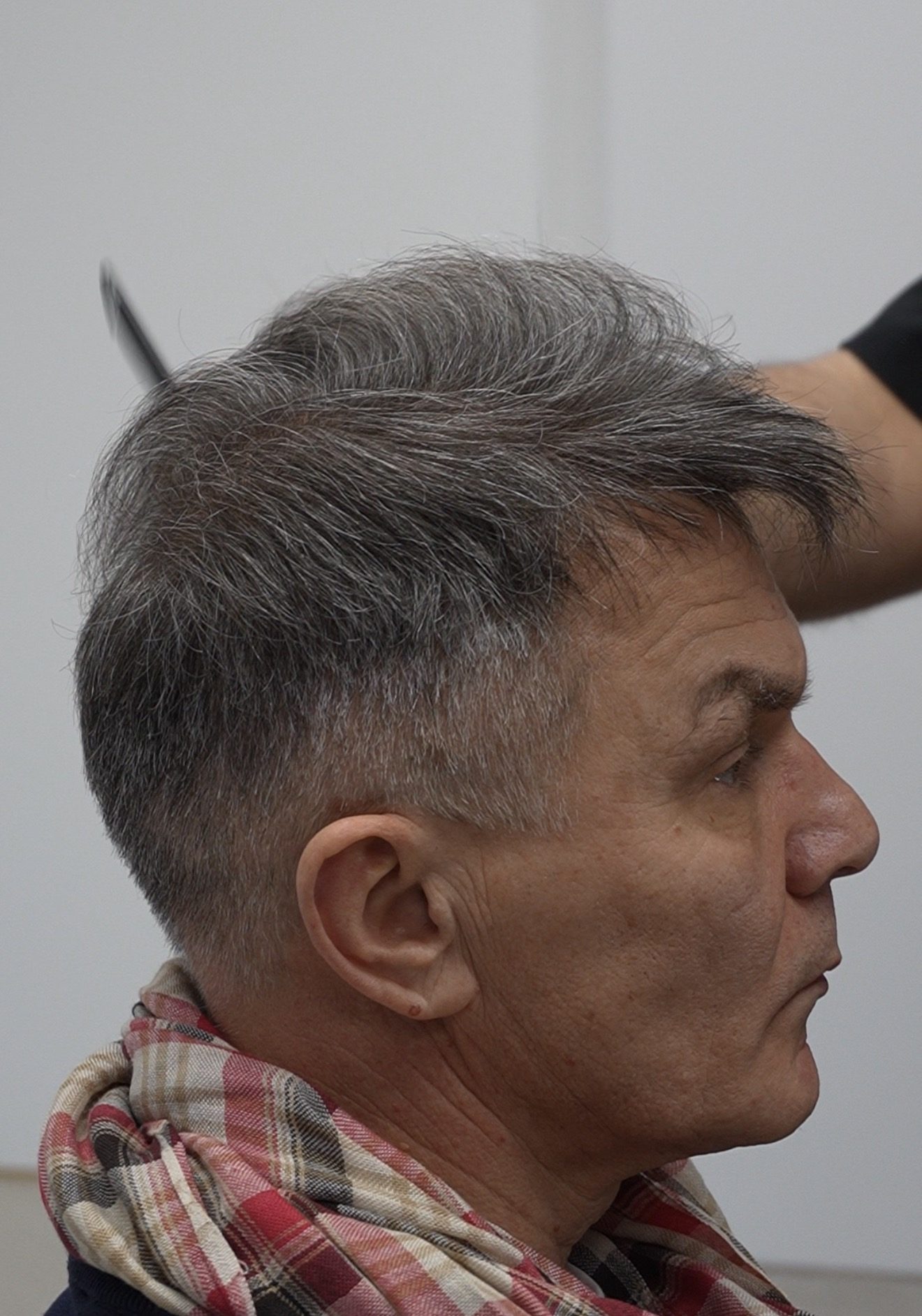
What is the FUE method?
FUE is a technology of point extraction of hair follicles. A hair transplant surgeon uses a specialized micro-instrument to extract each graft individually, without any linear incision. The harvested grafts are transferred to areas of thinning or absent hair, taking into account the natural direction and angle of growth.
The procedure requires exceptional precision from the surgeon and the team at every stage: from graft extraction to preservation and final implantation. The survival rate of grafts and the final aesthetic outcome depend directly on the quality of handling.
Indications for FUE hair transplantation
The method is recommended for:
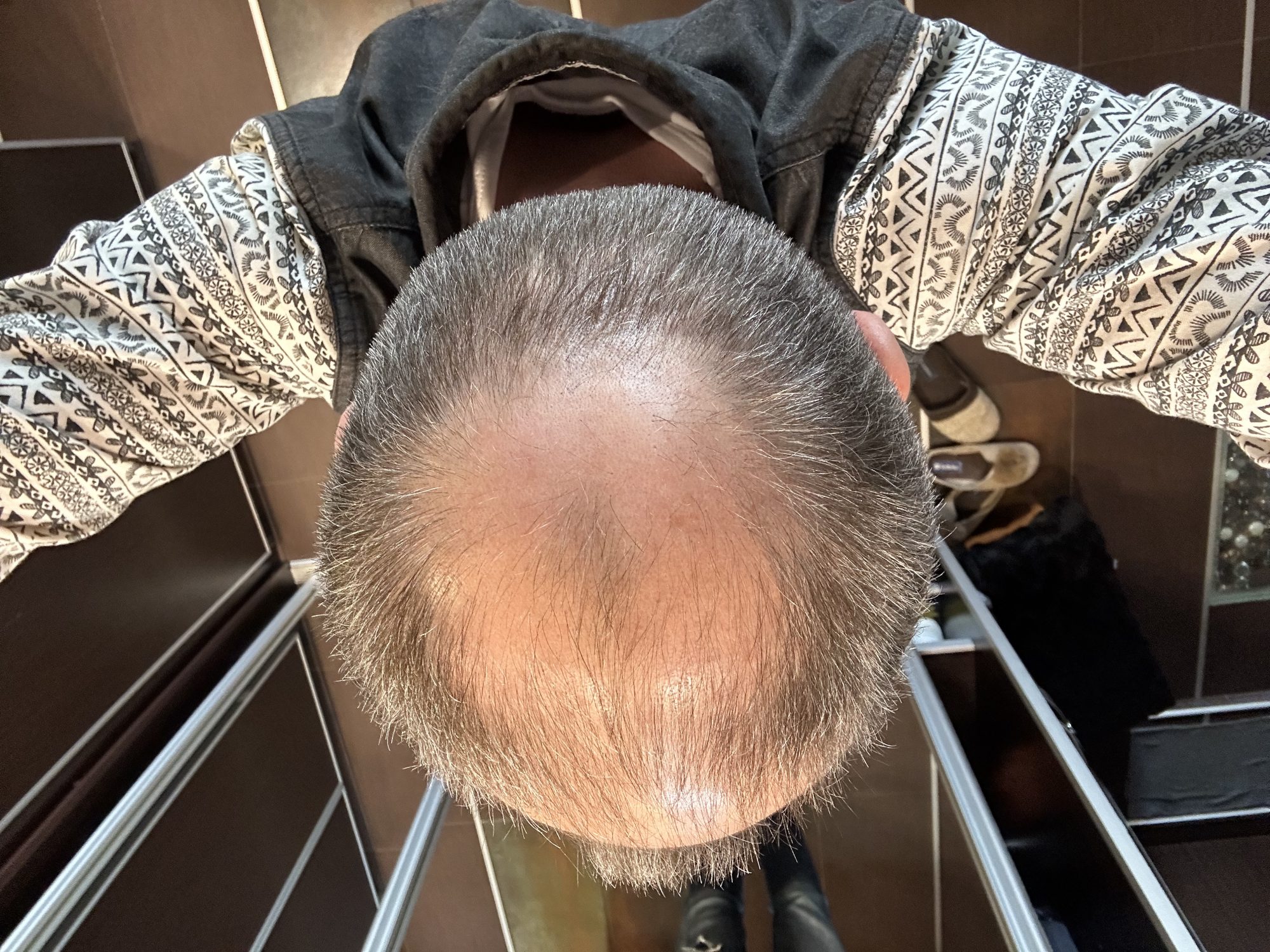
androgenetic alopecia stages II–VI according to the Norwood scale;
post-traumatic and post-burn scars in the scalp area;
restoration of eyebrows and eyelashes after trauma, disease, or excessive removal;
insufficient density of beard and mustache;
localized thinning of hair in specific areas;
desire to correct the hairline.
How the procedure is performed
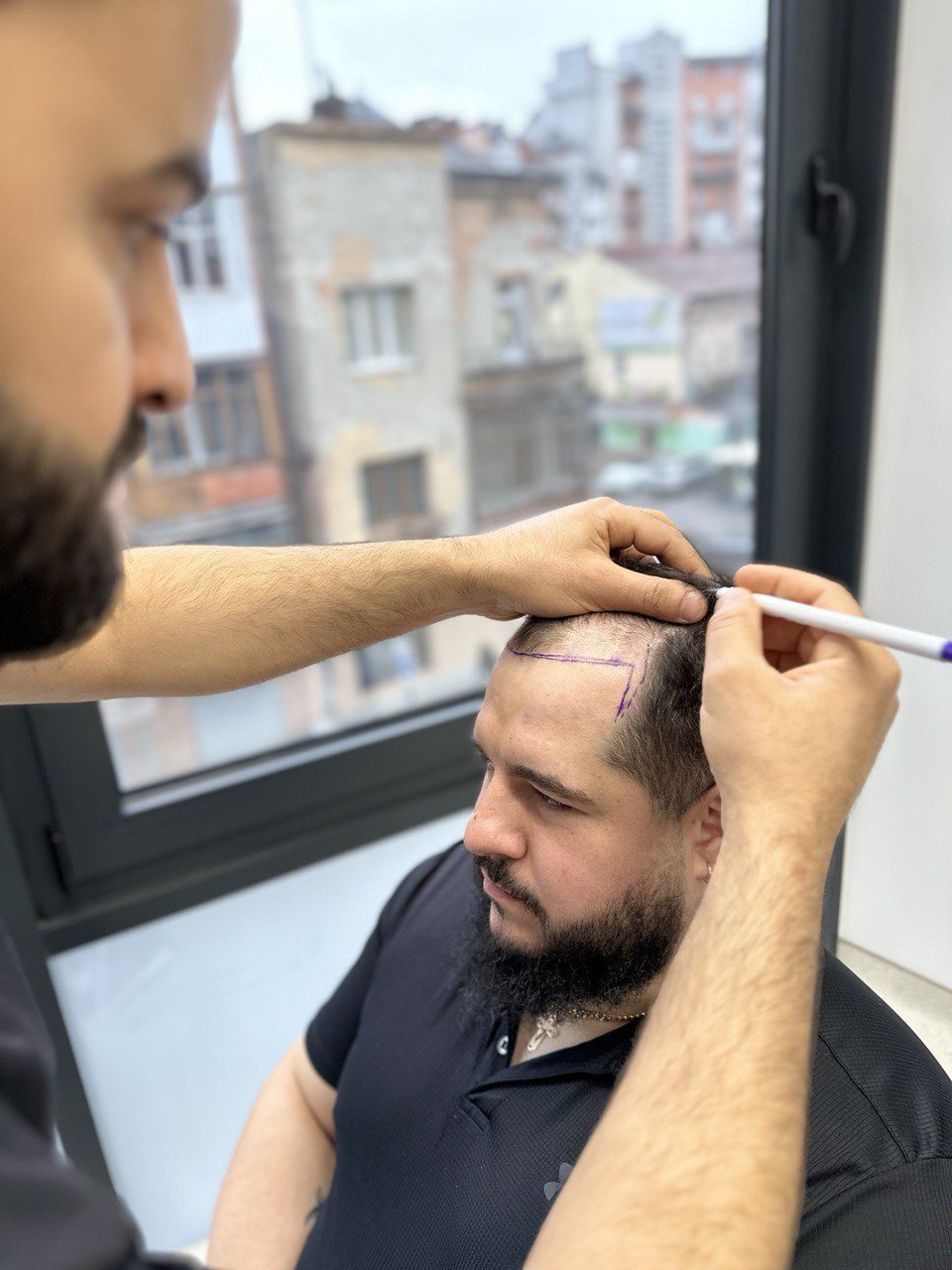
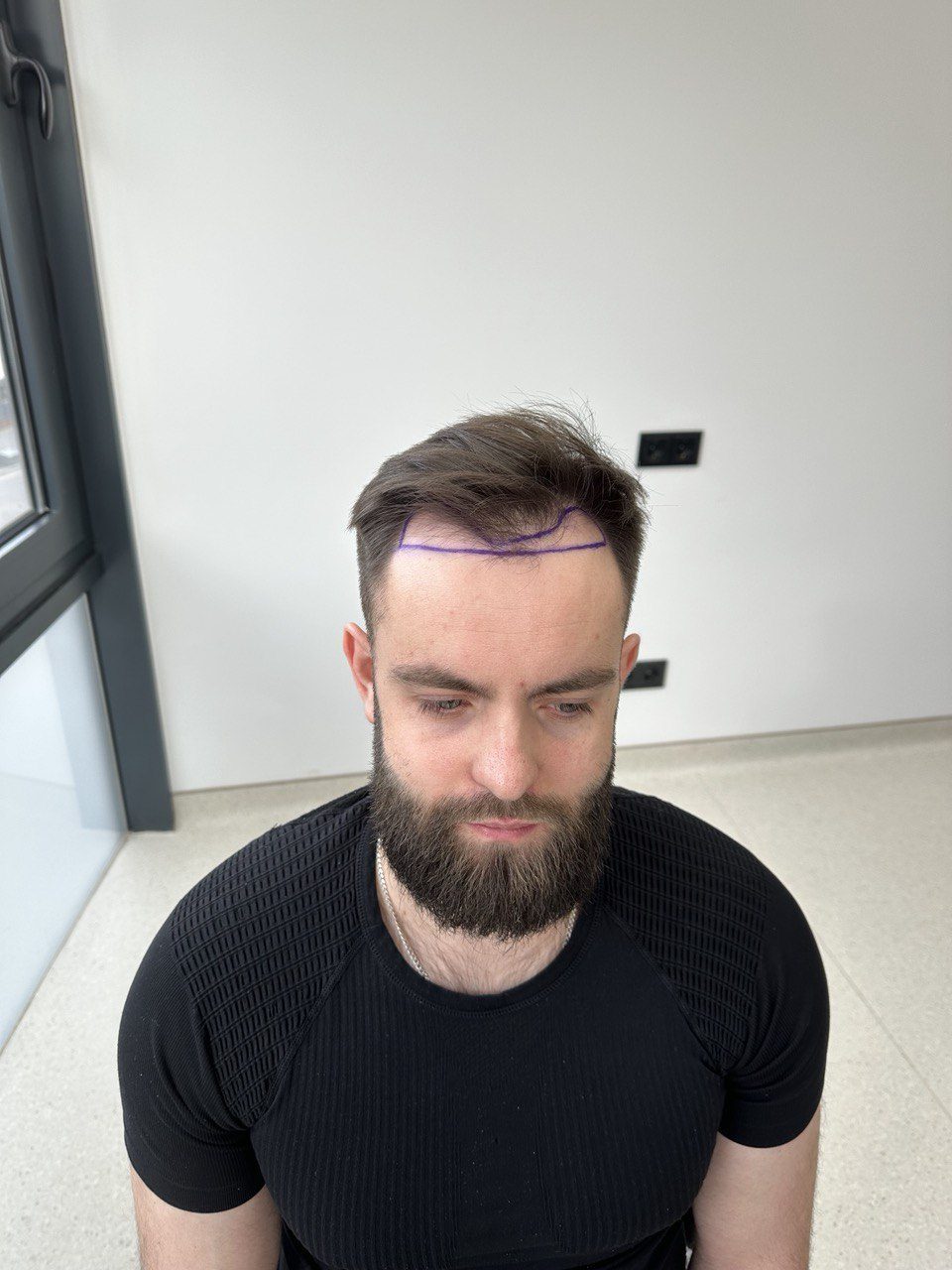
Consultation and planning.
Before the procedure, a detailed consultation with the surgeon is conducted. Together with the patient, the desired hairline design is discussed, the required number of grafts for an aesthetically natural result is determined, and the donor area is selected.
Preparation and anesthesia.
The procedure is performed under local anesthesia. The patient remains conscious and experiences minimal discomfort. The surgeon and assistants prepare the donor and recipient areas.
Extraction and harvesting of grafts.
Using a microsurgical punch, the surgeon extracts each hair graft individually. Micro-points remain at the donor site, which heal independently and become completely invisible over time—without any linear scar.
Microscopic evaluation and sorting.
Grafts are examined under a microscope for quality and viability. They are then carefully sorted according to the number of hairs in each graft to match them to specific zones. This ensures maximum naturalness of the final result.
Creation of micro-incisions.
Micro-incisions are created in the recipient area using micro-blades (often sapphire) or needles. The surgeon forms them taking into account:
the direction of hair growth;
the angle of inclination (for a natural appearance);
density and spacing;
depth (according to graft size).
Implantation.
The evaluated and sorted grafts are implanted into the balding area, respecting the natural direction, angle, and density of hair growth. This stage determines the final natural appearance of the hairstyle.
Advantages of the FUE method
• absence of linear scars in the occipital area;
• minimal discomfort during the post-procedure period;
• shorter rehabilitation period compared to other transplantation methods;
• the ability to wear short hairstyles without visible signs of surgery;
• natural-looking results.
Recovery and results
After the procedure, the patient receives detailed written instructions and a set of care products for the first 14 days.
The recovery process occurs in stages:
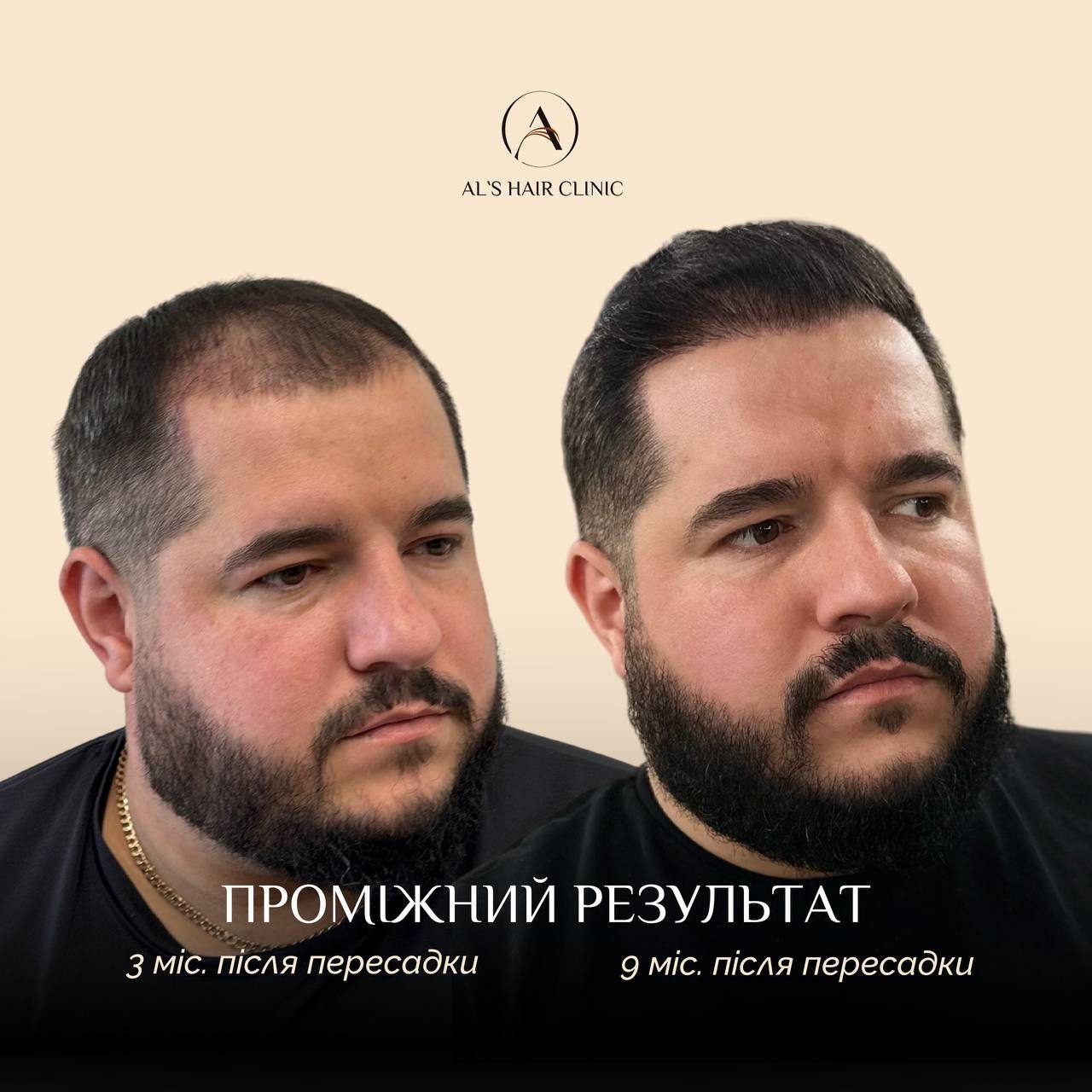
1–4 weeks – micro-points in the donor area heal and become invisible. Transplanted hairs may temporarily shed. This is a normal phase of the cycle.
2–4 months – the beginning of active growth of new hair in the implantation area.
7–10 months – transplanted hair gains full strength, becomes thicker and longer. The final volume of the hairstyle is formed.
As early as one month after transplantation, any modern hair care and strengthening products may be used. The longer the transplanted hair grows, the fuller and more natural the hairstyle appears.
Hair transplantation is a decision that requires a thoughtful approach and detailed planning. Schedule an initial consultation with a hair transplant surgeon: together we will assess the condition of the donor area, determine the number of required grafts, and develop an individualized procedure plan tailored specifically to you.